Film Noir
  • Noir Overview
  • Noir Contexts
    • Social Political Contexts
    • Women in Society
    • Pulp Fiction
    • Film Industry
  • Noir Conventions
    • Noir Technical Conventions
    • Noir Characters
    • Noir Narrative Conventions
  • Noir Films
    • Detour
    • The Maltese Falcon
    • Double Indemnity

Women in society

  • The role of women in American society changed a lot in the 1940s-1950s, due, in large, to the social and economic disruption created by World War II. 
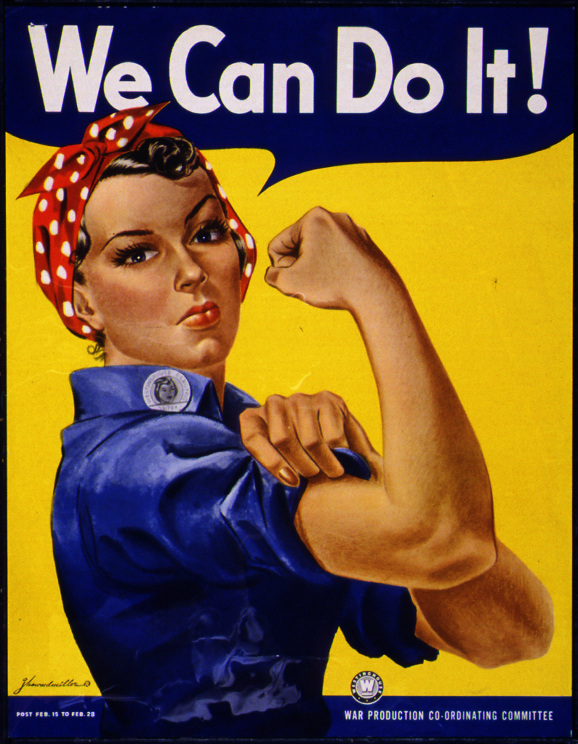
  • The draft of American males into the army in the 1940s and the mobilisation of industry for the war effort meant that women became the main source of factory workers - a dramatic change from the stereotypical role of housewife, financially dependent on her husband. 
  • When the soldiers came home from war, women were expected to return to their homes and their traditional roles, but these women now had a greater sense of independence. Such changes in women's status challenged both male dominance in society and traditional values.
  • Commentator Colin McArthur has attributed the misogynistic view of women in noir as due to both the heightened desirability of women to men who are away fighting, and the suspicion of what they are doing at home. In other words, representation of women in film noir as being, at least in part, a backlash against women which reflected the loss of stability and identity of the times. 
  • The clear demarcation between women who are supporters of and subordinate to men and the independent, strong and ruthless femme fatale can be seen as reflecting such suspicion and anxiety. 
  • The independent femme fatale's lack of association with home and family poses a threat to patriarchal society and her sexuality, outside acceptable societal norms of the time, is seen as a destructive force.
- Media Studies - A resource book for Year 13 Students, Chesterman, S & Winnall, A


The 1940s also brought a major challenge in the area of gender and family roles. The male draft combined with the industrial mobilisation for the war effort (the entire U.S. auto industry ceased making cars from 1942-46 to concentrate on armaments) made women the primary source of factory workers for the huge number of vacancies.
The previous female stereotype of the housewife financially dependent on the male was blown away. This was called the ‘Rosie-the-Riveter’ syndrome.
Soldiers returning from the stresses of war came home to newly independent women unlike those they’d left behind. Arising from this new male anxiety and eternal male fantasies of women was the ‘femme fatale’, a siren-like figure of desire whose distinctive characteristics, compared to previous female archetypes, were her independence, strength and ruthless desire.
- www.bighousefilm.com

Picture
Powered by Create your own unique website with customizable templates.